Pages

Monday, December 30, 2013

Why Instagram is Still Relevant for SEO


Search engine optimization is the process of formatting document markup and content so that it is more readily understandable for the search engine. SEO also aims to help improve document ranking for a set of keywords that may appear on that document. Ultimately everyone would like to rank at the top of the search results and SEO is a legitimate approach to making this happen. However, is Instagram also a legitimate approach? Is it still relevant for SEO?
With the prolific use of these social networking sites, I think it’s safe to say that they can be relevant on how one use them in SEO. Search engines have been using social networking signals as a weight to indicate trustworthiness and relevance. However, in reality, these signals are not really a strong factor in ranking websites or any page for that matter. Google+ is still considered to be the only one which has a “direct” impact on Google’s search engine rankings; although Facebook and Twitter can be a great way to get your content or page to be indexed. 


Image Optimization 

However, it doesn’t end there. Sharing your photos are not enough. You should take advantage of hashtags. Promote pictures with hashtags coupled with the specified hashtag of your business or company. Hashtags create more exposure for your brand. They likewise make it simpler for people to locate your products. Most significant, hashtags can help you increase the quantity of your followers. Also, making use of keywords to name photos and write captions can, together with hashtags, make photos more searchable; and eventually, these will also show up on search engine result pages, which is always a benefit. Leveraging Instagram photos for image optimization can be yet another way to help with organic listing.
Instagram might not be as huge as Facebook and Twitter – at least not just yet. However, businesses are beginning to see this opportunity as they are now including this photo sharing social networking service in their search engine marketing campaigns. In the coming years, you can’t doubt that Instagram is still relevant for SEO.


Monday, December 23, 2013

How to optimize blogger post titles!!

How to optimize blogger post titles!!

Step 1.
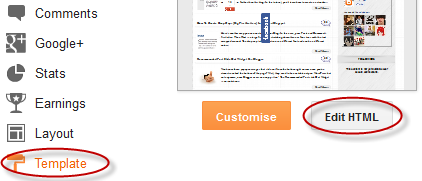
                  Log in to your Blogger Dashboard and go to Template > Edit HTML


http://www.webindia.com/ 


Step 2.  
                  Check the "Expand Widget Templates" checkbox

http://www.webindia.com/ 

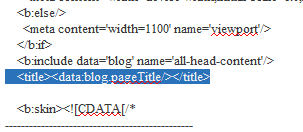
                  Find (CTRL + F) this code:

http://www.webindia.com/ 

                     Replace the code above with this one:

<b:if cond='data:blog.pageType == "item"'>
<title><data:blog.pageName/> |<data:blog.title/></title>
<b:else/>
<title><data:blog.pageTitle/></title> </b:if>


                      Click Save Template and you are done. 


Wednesday, December 18, 2013

Google's Matt Cutts Calls Out Nailing Another Link Network

The rumors floating around the SEO industry right now is that Google has crushed yet another link network. SAPE links, a link network I honestly never heard of, was the target this time. Any of those using SAPE links were supposedly penalized and downgraded in their rankings over the past 24 hours or so.

We have dozens of threads about downgrades of Google rankings but the black hat SEO forums all seem to point at SAPE Links as the cause.

Black Hat World and Black Hat Group both seem convinced the reason for the downgrade in rankings in Google yesterday was due to having links from SAPE links.

However, others are not sure if it is specific to SAPE or some other link network.

There is clearly something going on, it doesn't seem to be an algorithmic update but it does seem to be a targeted penalty attacking specific link networks and the sites/webmasters that use them.

Here is a list of threads that are complaining about ranking declines at Google Webmaster Help.

A tweet from about a month ago from Google's Matt Cutts kind of supports this. SAPE Links is a Russian link network:


TLA's home page PageRank is still a 6 but the link sellers may have taken a hit?

Are you a TLA link seller? Did you notice a hit? Are you a TLA link buyer? Did you notice a hit?

Forum discussion continued at BlackHatWorld, WebmasterWorld and Twitter.

Tuesday, December 10, 2013

Basic SEO Techniques

Optimize your Title Tag
Every page on your website should have its own unique title tag. the length of the title tag is no more than 70 characters (including spaces).Be both intriguing and informative enough to prompt search engine users to click through to your page (as title tags are typically used in the snipped displayed in the natural search results).

Create compelling meta descriptions
Along with your title tags, the section of every page on your website should contain a customized meta description.These short page summaries should not be more than 150-160 characters long and should include at least one mention of your page’s target keyword phrase.

Utilize keyword-rich headings
When it comes to your pages body text, one of the best things you can do to improve your overall SEO value is to include <h2> and heading tags containing your target keyword phrases in your content.

Add ALT tags to your images
The content found in the ALT tag field is also important when it comes to SEO.Use your ALT tags to clearly and accurately describe your website’s images, working in keyword phrases as they occur naturally.

Create a sitemap
One of the best things you can do to help the spiders index your website is to create a sitemap – a page listing links to all the other pages on your site. There are plenty of different automated tools that can generate these important pages for you, though you can always create a sitemap by hand if your site is small.

Build internal links between pages
Another way to help the search engine spiders to catalogue all of your site’s pages is to create internal links that connect your different pieces of content.

Update your site regularly
You will want to implement is to update your site periodically. Because the search engines’ top priority is serving up the results that will best meet their users’ needs, they prefer to share websites that contain the latest, most up-to-date information. In addition, the more content you post to your site, the more keywords your website will include – increasing your odds of generating search engine traffic.

Thursday, December 5, 2013

Social Media Growth Forecast: Google+ to overtake Facebook?

Social networks, and in particular the user signals that flow from these platforms into the net, play an increasingly important role in the overall perception. Shares, Likes, Comments, Plus Ones, Tweets and Pins coming from anywhere, promoting recommendations, URLs, images, and content through the Internet – all of which are closely linked to personal user information from the Social Graph. Social is just important for Search – and we now have more than 20 trillion global social signals in this large and continuously growing database.

Comparing Social Signals from Google+ and Facebook

We recently carried out an analysis taking social signals from Facebook and Google+ and placing them under the microscope. The basic message: Google+ is growing like crazy, but is in absolute terms still worlds behind Facebook. The fact that Google+ percentage grew much stronger than initially proposed is especially surprising. However, the activity of users on the Google network is much more behind. The social platform of founder Mark Zuckerberg grew more moderately, but is already incredibly large. Concerning both absolute numbers of social signals and the activity of users, Facebook is seemingly indisputably ahead.
The first analysis on Facebook and Google+ has been revised and repeated. In the center of the investigation, the shares as signals from both networks were now measured exclusively. Based on these values, we have calculated the percentage growth of Google+ and Facebook starting from January 2012 to the current period of April 2013. The graph below represents figures for the United States:


Again Google’s network shows a strong percentage of growth – especially the striking increase from February to April. With Facebook however, the curve only rises very slowly. If you look at the absolute numbers to the right you can see why this is.

In the month of April 2013, the absolute number of Shares for Facebook was fifteen times greater than that of Google PlusOnes. The Google network is growing at the stage of small to small which therefore is fast. Facebook is growing from its extremely large base to something larger, and is therefore slower.
The remarkable thing is that Facebook is still growing. And that’s why the blue giant appears to be unquestionably ahead of the market.

How can Google+ overtake Facebook?

With the support of new services like Google Glasses and the mandatory creation of a Google+ account as part of Android Activation for smartphones, the rise of Google+ accounts will only continue to increase as new services become automatically linked to profiles. Not long ago, Google announced that its Android operating system has over 900 million activations. A large part of it is directly connected to a service and Google+ profile. Last year alone, this meant a growth of over 100% on the basis of 400 million about a year ago.This interested us and we wanted to know precisely when this would happen. Therefore, we have developed a small growth forecast.

When will Google+ be bigger than Facebook?

First, I want to emphasize that the following calculation – in stark contrast to our other publications – is rather a small glimpse of what the future might be, not a scientific claim. There are many factors that can change how the networks evolve.
Ultimately, growth rates are constantly changing – which in itself is always the variable ratio of the calculation basis related (condition: before and after), i.e. the increasing network size as absolute value, and the growth rate as a percentage size.
Now let’s take a look at the numbers. The basis for the calculation are the percentage growth rates of the two networks of the last 6 months, referring to the rise of social signals or, more precisely, only the shares.
Over this period, Facebook saw a monthly average growth of almost 10 percent, while Google+’s average grew by almost 19 percent per month (again, we refer to U.S. figures). These values form the basis for our forecast. So if this should remain so, we see the development of the two networks for the coming years is as follows:


One thing that is clear in this chart is the incredibly rapid growth of Google+. With a constant percentage growth, Google+ will overtake Facebook in less than 3 years in February 2016.


Tuesday, November 26, 2013

Online PPC Management


What is the right time to invest in a Pay Per Click campaign?

If you want a lot of targeted traffic on your website, it’s the right time to invest in such a campaign. Although you get the same effect as incorporating SEO and social media, but it takes time to actually catch up, sometimes even months or more. The investment will make you come face-to-face with identifiable things that you need to change or build up, in order to convert visitors to customers on your site.
When you know exactly what your conversion goal is. For example, if you know exactly that you have to sell an item via the online medium or you have to fill a form to generate leads, then you have a basic goal in mind. In such a case when you have specific goals, it’s hard for SEOoptimization to work.
In case you have a particular product that is to be sold and it’s really in-demand, the campaign can really work wonders. You can manage to get a thousand clicks per month with it as niche market works best via the medium of online business.
Advantages of PPC campaign:
·         Before launching an out-and-out advertising campaign, if you want to test keywords in order to test keywords for getting potential customers interested in your campaign, Pay Per Click works.
·         It also ensures that the most relevant traffic comes to your website. The campaign also boasts to give you an improved ROI.
·         The campaign can provide you support when your sales are beginning to grow.
·         It also works best because of the nature of campaign management is anyways intuitive in a changing marketplace.
·         In case you need help or advice on your new marketing plans that are tailored to grow your business, this campaign works to its optimum to provide you with whatever you need, it may also include SEO advice or SEO Package suggestions.
Pay Per Click(PPC) is one of the most sought management service in the online industry because it offers higher visibility and marketing. This, because by clicking on ads you directly are made to land on the page desired. This increases traffic of the visitors. There is another advantage of cost effectiveness. Adding on to it, PPC is less time consuming when compared with SEO techniques

Monday, November 18, 2013

The 10 DOs & 10 DONTs in Google AdWords


Starting with the right foot means a lot in advertising. Read more about the 10 DOs and the 10 DONTs that will help you optimize your AdWords account!

http://webindia.com/


1. DO utilize the keyword planner. Google has a very excellent tool that lets you to find, expand and optimize keywords. Utilizing the tool you may be able to find quite a few long tail keywords. The tool is very excellent at what it does, but it takes a little bit of patience to be able to get the most excellent keywords.

2. DO test and measure.  The great thing in shell out-per-click advertising is that you can place a daily budget, along with a maximum you’re willing to shell out per click (bid) for a specific keyword.  The information that you can derive from these activities is priceless in that you can be taught a great deal about which advertising practices are efficient devoid of spending lots of funds.  Moreover, the information is in up to the minute. Another benefit of pay-per-click ad campaigns is that the information lets the advertiser to recognize keywords that are profitable, and optimize their site to entice organic traffic.

3. DO attract guests back to your website by means of re-targeted ads. If you would like to draw guests who have departed from your website to go back into your site, the simplest method to do this is by creating eye catching ads that are appropriate to the consumer.

4. DO utilize A/B testing to make the most excellent converting advertisements. The AdWords platform is absolutely great for A/B testing. You can make as many advertisements as you like, and you can tweak each advert in small or large ways and then measure the results. The fact that AdWords lets you measure the results so accurately makes it a great A/B testing tool.

5. DO take the time to hone your ads that will cater to the needs of your target prospective clients matching their search queries with relevant advertising messages.  When you’resending viewers to your site, it’s important to make sure that the viewers you’re reaching out to are actually interested in your products or services.

6. DO perform enough keyword research prior to deciding which keyword phrases to target with your campaign.  The Google Adwords Keyword Planner is free of charge to utilize and produces significant information that is important to the success of your efforts.  The research when done right will produce results you hadn’t expected and will expose opportunities you never knew existed.
7. DO have tightly themed Ad Groups. If you sell Pearl Earrings and Diamond Earrings, then make certain you have a different Ad Group for everyone.

8. DO utilize Conversion Tracking. You need to keep track of how much sale is costing your business, make certain the shopping cart pass off information to AdWords. This means you will be capable of seeing precisely what your return on investment or ROI is for each AdWords ads and keywords, and which traffic sources are valuable.

9. DO setup an Exceptional Website. Little changes can perk up your conversion rate considerably; you can put together more sales or produce more leads. There are a lot of other parts that require to be looked at to enhance your conversion rate.

10. DO adjust your bids per geographic location and based on actual results. Use Geographic targeting and make sure your ads are tailored to the target market. Separate campaigns for separate countries can work well. You can also exclude locations that you cannot service to or are not interested in inquiries from. Check your campaign Geo-targeting to ensure you are at least serving ads to the correct country, in the right language. If radius-targeting is being used, make sure it targets an accurate range surrounding your location.

11. DON’T choose the keywords to target merely on the basis of search volume.  At the same time as the thinking that many monthly searches for a given phrase is tempting, there are significant drawbacks to ignoring other, more important elements.  Foremost, consider the fact that a highly searched phrase is going to have more competition  and the more competition means that the expenses to target that keyword will be higher.  next, and more important than the expenses factor, consider the relevance of the keyword with deference to the searcher’s needs, and measure up to that to the actions on your website that you’d like the visitor to take.  If the keyword is not contributing to to these conditions, it is not worth the higher expenses to rationalize the lower conversion rate.

12. DON’T write your ads to try to entice as many visitors as possible.  If someone is searching for red shoes from France, and you’ve written a generic ad targeting all sorts of shoes even though you only sell rubber boots, your ad will give the wrong impression to many viewers and they would be clicking and visiting your site and they’ll hang about for about nine seconds until they realize that you don’t offer what they’re after.  They’ll bounce out of your site as quickly as they arrived and move on to other relevant companies, forgetting about you and causing you to pay for a click.  The more narrowly focused your niche, the more specific your ad needs to be.

13. DON’T pay too much attention to keyword popularity metrics. Google AdWords make the whole process look like you are doing something really wrong. It will tell you that your advertisements are not running because your keywords are not looked for, but you do not need to shell out very much attention to this. You need to concentrate on the words that you know your target prospective clients are going to type into Google. If you are sure of these, include them and evaluate the traffic level.

14. DON’T try to outbid your competitors. There is always going to be someone who has a larger budget than you. If you outbid your competitors then you may be fairly contented with your advertisements on top, but your budget will also run out faster.

15. DON’T undervalue the effect of your landing page. Your landing page may be the thing at fault. You may not be getting many conversions because your landing page is at fault. It may not be your advert, and a lot of viewers make the mistake of constantly changing their advertisements. If you find yourself in this position, then try changing your landing page. Or, have a lot of landing pages and point different advertisements at them to see which advert and landing page combination works the most excellent.

16. DON’T neglect Geographic targeting. Advertisers that don’t limit and target their businesses’ websites by location are making a big mistake. It is smarter to be conscious of geographical targeting. It is significant for advertisers to understand that disregarding such part of PPC management can in fact be harmful to the business. These little deliberations are typically knowledge supported decisions that the advertiser has to decide on, think about and keep in check so as to keep up the business. Steering clear of these errors may not at all times help out in improving the advertising, however doing these mistake will absolutely be counterproductive to the business.

17. DON’T put all your keywords in one adgroup. As soon as you set up your first account you are brought through a pace by pace procedure where you set up one campaign and one ad group. A lot of people put in all their keywords into one ad group. This may contain many not related keywords. You need to separate your keywords into separate ad groups of much related keywords that relate closely together. This way it will be effortless to create an appropriate ad that has text and a landing page that matches to your keywords. By means of this approach you will be blessed with an elevated quality score and a higher click through rate. An elevated quality score and click through rate equates to you achieving improved positions.

18. DON’T forget to optimize your landing page. Optimize the landing page of your website for Quality Score purposes and categorically optimize it for conversion rate. Whatever you declare in your ad must be included on the landing page.

19. DON’T rely too much on generic keywords. When advertisers desire to get as much search engine traffic, advertisers frequently bid on awfully generic keywords. Generic keywords are not likely to generate conversions and may require a great negative keyword list to be effective. When your ad copy is shown for generic keywords it could appear to be less related to the actual search query than a phrase or exact match.

20. DON’T stop testing. You should be testing all elements of your account such as ad copy, target 
keywords, landing pages, etc… Have a testing arrangement. Make certain all tests are statistically significant and you are not running too numerous or too little tests at any one time.